Crawl Space Ductwork: What to Know Before a Cleaning
Many Puget Sound homes run ducts through a crawl space. What that means for dust, moisture and pests, and what a duct cleaning can and can't fix.
A lot of homes around Renton were built over a crawl space instead of a full basement. In many of them, the furnace or heat pump sends air through ducts that run under the floor, between the joists, a foot or two above the dirt. You rarely see that ductwork, so it's easy to forget about it until something smells off or a register starts puffing dust.
Here's what crawl space ducts are exposed to, what a cleaning can do for them, and which problems need a different kind of help first.
Why ducts under the floor are different
Ducts in a crawl space live in a space that isn't heated or cooled the way your living room is. Around Puget Sound, that usually means cool, damp air for much of the year. A few things follow from that:
- Moisture is the main concern. The EPA says moisture should not be present in ducts and that controlling it is the most effective way to prevent biological growth inside them.
- Joints and seams matter. Return ducts pull air in. If a return duct under the floor has a loose joint or a gap, it can draw in crawl space air and whatever dust comes with it.
- Insulation wrap can hide problems. Many under-floor ducts are wrapped in insulation, so you can't see a loose connection or a stain without a closer look.
- Pests can find a way in. Crawl spaces are a common route for rodents. The EPA lists ducts infested with vermin as one of the situations where cleaning should be considered.
None of this means your ducts are dirty. It means the conditions around them are worth a look when you're deciding whether a cleaning makes sense.
Signs worth checking
You don't need to crawl under the house to notice clues. Pay attention to:
- Dust blowing out of floor registers when the system starts
- A musty or earthy smell that's strongest near the registers
- Droppings, nesting material or chewed insulation near a register or the furnace
- Registers that stay dusty a day or two after you wipe them
- One or two rooms that seem to get dusty faster than the rest of the house
If you do go into the crawl space yourself, bring a good flashlight and look for ducts that sag, have come apart at a joint, or have torn or wet insulation. Take photos. They're useful whether you call us, an HVAC contractor or a pest control company.
What a duct cleaning can do
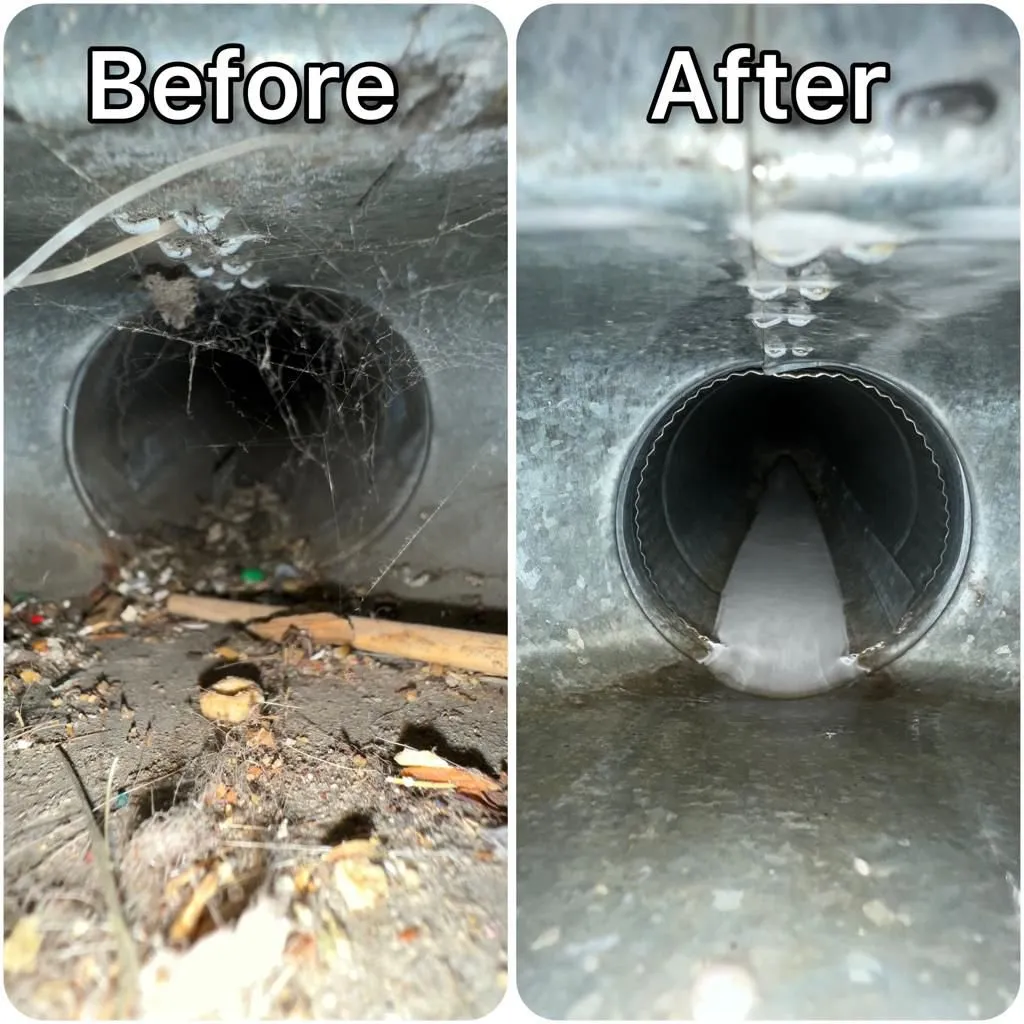
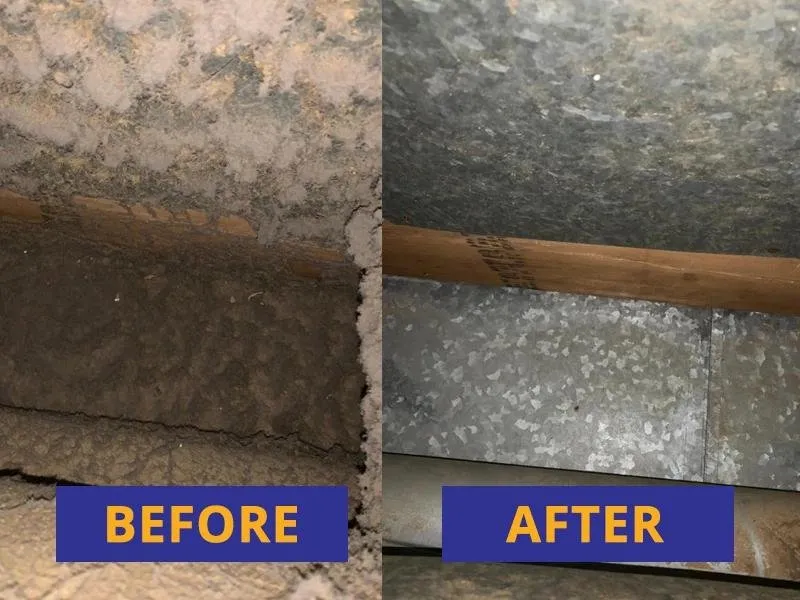
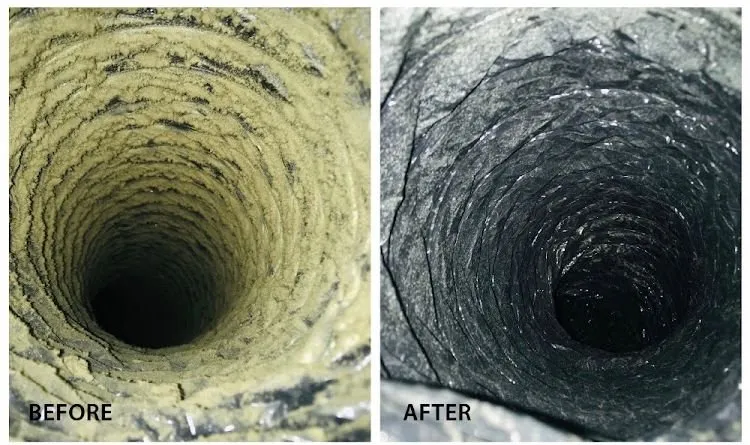
When the problem is built-up dust and debris inside the ducts, a cleaning is the right tool. Our air duct cleaning covers the supply and return ducts and the registers, using rotating brushes to loosen buildup and a HEPA-filtered vacuum to pull it out. The basic service is $199 for a system with up to 10 vents and $29 per extra vent. You can compare all services on our pricing page.
Floor registers over a crawl space often collect more than dust: pet hair, gravel, small toys and the occasional coin. Those come out during the cleaning too. If one run is clearly worse than the others, deep duct cleaning at $59.99 per vent lets you focus on the problem runs.
What a cleaning can't fix
This is where crawl space homes need extra care. A cleaning removes what's inside the duct. It doesn't repair the conditions that put it there.
Moisture and standing water. If the crawl space is wet, the ducts are likely to get dirty or musty again. The EPA points out that if the cause of a problem isn't corrected first, it will likely come back. Drainage, vapor barriers and ventilation are jobs for a crawl space or foundation contractor.
Wet or moldy insulation. The EPA says insulated duct material that gets wet or moldy can't be effectively cleaned and should be removed and replaced. If you suspect mold, have it confirmed by a qualified professional. If what we see looks like it needs that kind of specialist, we'll tell you.
Disconnected or crushed ducts. Reconnecting, sealing or replacing ductwork is HVAC work. If we find a separated joint during a cleaning, we'll point it out so you can have an HVAC contractor repair it.
Rodents. Have the pests removed and the entry points sealed before a cleaning. Otherwise you're paying to clean ducts that will be contaminated again.
A note on dryer vents
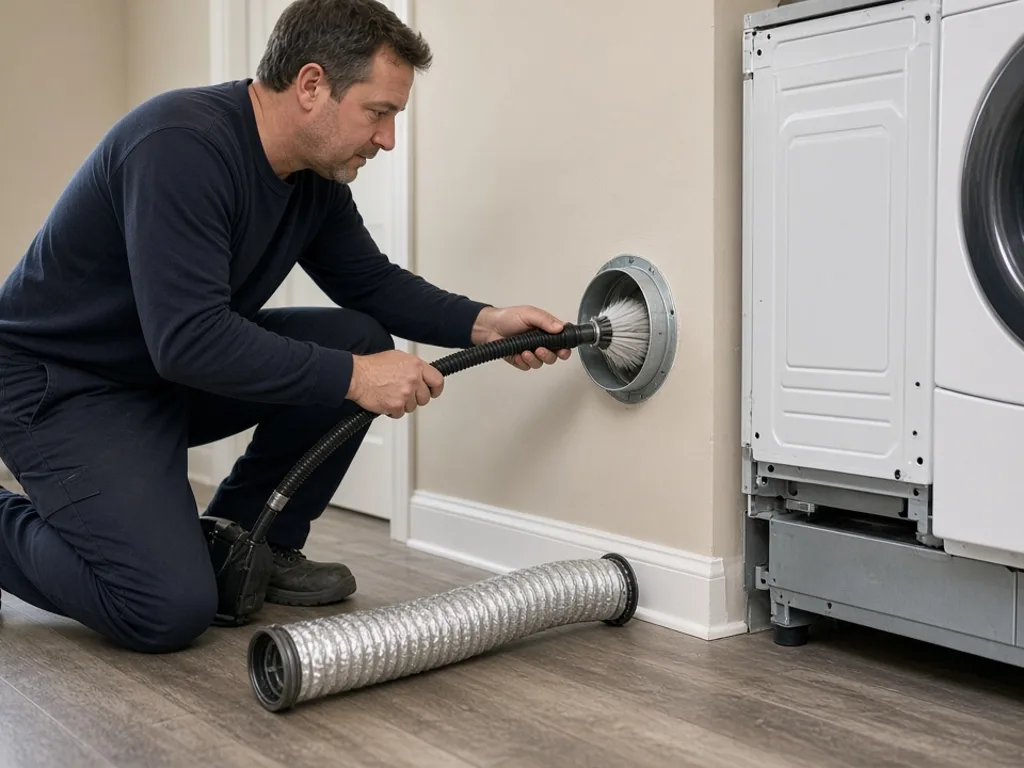
Some homes route the dryer vent through the crawl space to reach an outside wall. That's fine as long as it actually ends outside. Building codes require dryers to exhaust directly to the outdoors, and the U.S. Fire Administration notes that venting into a crawl space is prohibited because it can cause moisture and lint problems. If you aren't sure where your dryer vent ends, our dryer vent cleaning ($99 for up to 10 feet, then $15 per additional foot) includes an inspection, and we check the outside flap.
Putting it in order
For a crawl space home, the order of operations matters:
- Fix water problems and pest entry points.
- Have an HVAC contractor repair damaged or disconnected ducts.
- Clean the ducts so you start fresh.
- Keep up with filter changes so less dust reaches the ducts going forward.
Our service areas page lists the towns we cover around Renton.
If you're not sure which step you're on, request a free estimate. Moment Air Duct Cleaning Renton will look at the registers and the system and tell you plainly whether a cleaning will help now or whether something else should come first.
Sources
- Should You Have the Air Ducts in Your Home Cleaned?, U.S. EPA, last updated February 19, 2026
- Clothes Dryer Fire Safety, U.S. Fire Administration, accessed October 22, 2026
- Clothes Dryer Fires in Residential Buildings (2008-2010), Topical Fire Report Series Vol. 13, Issue 7, U.S. Fire Administration, August 2012